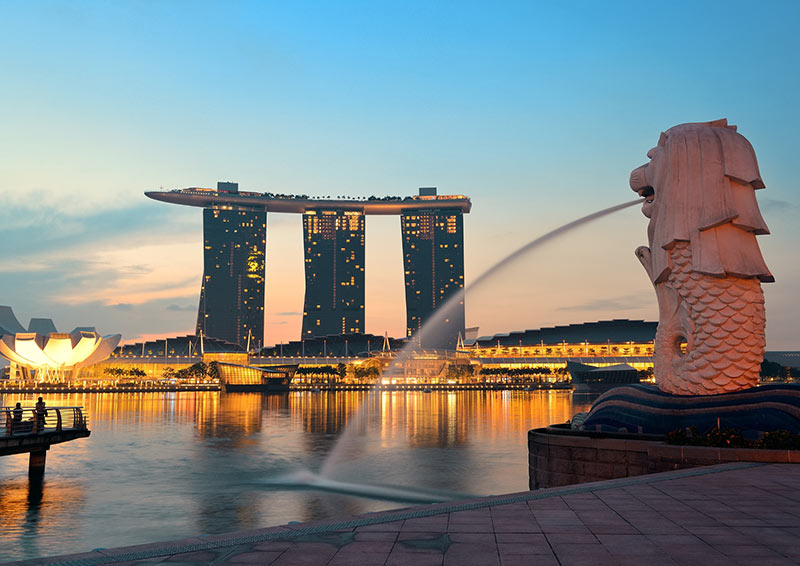
Singapore’s skyline is spectacular.

Marina Bay, the Merlion, Gardens by the Bay and many of the city’s famous attractions deserve a place on any visitor’s itinerary.
But seeing Singapore’s landmarks and understanding Singapore are two very different things.
Some of the most memorable parts of the city are found away from the postcard views: inside a neighbourhood wet market early in the morning, along streets shaped by immigrant communities, among conserved shophouses, beside old railway tracks, inside hawker centres and around the dining table.
That is where food, history and everyday life begin to connect.
For visitors who want to go beyond conventional sightseeing, there are three particularly rewarding ways to discover Singapore: explore its markets and cook its food, walk through its heritage neighbourhoods, or experience the city on foot through an active running tour.
What does it mean to experience Singapore beyond sightseeing?
A traditional sightseeing itinerary is often organised around individual attractions.
You arrive, take photographs, learn a few facts and move on to the next stop.
There is nothing wrong with that approach. It is an efficient way to see a city.
But Singapore becomes much more interesting when you begin connecting the places.
Why did different immigrant communities settle in particular areas? How did their traditions influence Singapore’s food? Why do shophouses look the way they do? How did a working river become a lifestyle destination? Why does an old railway corridor still cut through one of the world’s most urbanised cities? And what can a local market tell us about the way Singaporeans actually eat?
Experiences built around these questions allow visitors to understand the city rather than simply photograph it.

1. Start where Singapore eats: the neighbourhood market
One of the easiest ways to understand a place is through its food.
But the food story does not start when a finished dish arrives at your table. It begins with the ingredients.
A neighbourhood wet market introduces visitors to an important part of everyday Singapore life — vegetables, seafood, herbs, spices and ingredients that may look familiar to locals but completely new to a visitor.
Walk through the market and suddenly dishes such as laksa, chicken rice, sambal vegetables or ondeh ondeh are no longer simply names on a menu. You begin to see where the flavours come from.
The Market Tour & Cooking Class within Palate Sensations’ Singapore Experience continues that story from the market into the kitchen. Guests explore a neighbourhood market before returning to the culinary school for a hands-on cooking session and then enjoy what they have prepared.
That progression is important.
You do not simply taste Singapore food. You see it, understand it, prepare it and eat it.
For travellers interested in food and local culture, that creates a much stronger memory than simply ordering the same dish at a restaurant.
2. Walk through history — then cook the story
Singapore’s multicultural identity is visible everywhere.
Chinese temples sit near mosques and Hindu temples. Colonial buildings stand beside modern towers. Historic shophouses contain contemporary cafés. Entire neighbourhoods carry traces of the communities that built them.
But those stories become easier to understand when they are connected with food.
Palate Sensations’ Walk & Cook experiences have been developed around five very different parts of Singapore: Chinatown, Emerald Hill and Peranakan culture, Fort Canning, Kampong Glam and Little India.
Each begins as a guided heritage experience and then continues in the kitchen.
Chinatown: migration, murals and makan
Singapore’s Chinatown is much more than souvenir shops and restaurants.
Its streets contain stories of immigrants who travelled from southern China to what they called Nanyang — the Southern Seas — searching for work and opportunity.
Historic streets and murals provide a way to discuss migration, jobs, community life, overcrowded shophouses and groups such as the Samsui women who contributed to Singapore’s development.
The experience then continues through Chinese culinary traditions, connecting what happened in the streets with what eventually appeared around the dining table.

Emerald Hill: understanding Peranakan Singapore
Walk into Emerald Hill and Singapore changes again.
Colourful façades, decorative tiles, narrow shophouses and architectural details provide an introduction to Peranakan history and identity.
The Peranakan story itself reflects cultural exchange across Southeast Asia, combining influences that developed into something distinctive.
Food is one of the strongest expressions of that identity, which makes a cooking experience a natural continuation of the heritage walk.
Fort Canning: 700 years on one hill
Fort Canning demonstrates just how many layers of history can exist in one place.
Ancient Singapura, archaeology, colonial gardens, valuable spices, military history and wartime events can all be explored within the same landscape.
From there, herbs and spices provide the bridge into the culinary part of the experience.
Kampong Glam: royalty, faith and community
Kampong Glam introduces another chapter of Singapore.
Once associated with the Malay royal settlement, the area reflects Malay, Arab, Bugis, Javanese and wider Muslim influences.
Sultan Mosque, Bussorah Street, conserved shophouses, murals and the former royal precinct help explain how the neighbourhood developed.
Food then becomes another way of exploring those influences.
Little India: culture through all the senses
Little India may be one of Singapore’s most sensory neighbourhoods.
Flowers, spices, colours, markets, traditional shops, murals and places of worship provide a rich introduction to South Indian community life in Singapore.
The experience continues with a vegetarian South Indian cooking session and an introduction to banana-leaf dining traditions.
Together, these experiences demonstrate why food and heritage work so well together. The street explains the dish. And the dish gives the street another meaning.
3. See more of Singapore by running through it
Not every cultural experience needs to move slowly.
For active travellers, a guided running tour provides a completely different way to experience Singapore.
Running allows you to cover more ground than a conventional walking tour while remaining at street level.
You notice the city changing around you. Skyscrapers become historic shophouses. Railway infrastructure becomes tropical greenery. Waterways lead through residential neighbourhoods. Former military barracks give way to botanical gardens.
The private Run Singapore with @sgwithlynette experiences cover approximately 10 km at a relaxed pace, with regular stops for stories, photographs, walking and exploration. They are experiences rather than races.
Four routes reveal four different Singapores.
One follows Marina Bay and the Singapore River before finishing around Tiong Bahru. Another follows the former railway through greener parts of the island. A third uses Singapore’s waterways and park connectors to reveal everyday residential life. The fourth connects Holland Village, former military areas and the Singapore Botanic Gardens.
You finish having exercised — but also having learnt something about how Singapore developed and how people live here. And because this is Singapore, the experience naturally ends around food.
Why food is such an effective way to understand Singapore
Singapore food is not separate from Singapore history.
It is the result of migration, trade, adaptation, available ingredients and different communities living alongside one another.
That is why exploring food only as a list of famous dishes misses part of the story.
Understanding where a dish came from, why particular ingredients are used and which community helped shape it makes eating far more interesting.
It also makes the experience memorable.
You may forget the date attached to a historical event. You are less likely to forget walking through a neighbourhood, hearing the story, smelling the spices and then preparing the food yourself.

Which Singapore experience is right for you?
Choose according to the way you like to travel.
If food is your main interest, begin with the Market Tour & Cooking Class.
If culture, history and neighbourhoods interest you most, choose one of the Walking Tours & Cooking Experiences.
If you like staying active while travelling, consider one of the Running & Makan Tours.
And if you have several days in Singapore, the experiences complement each other rather than repeat one another.
A heritage walk may explain the Singapore of the past. A market visit shows everyday food culture. A running tour reveals how the modern city actually functions. Together, they build a much fuller picture.
Discover Singapore beyond the usual sightseeing
At Palate Sensations, The Singapore Experience brings together markets, neighbourhoods, heritage, professional tour guiding and hands-on culinary experiences.
Instead of simply looking at Singapore, you can walk it, run it, explore it, cook it and taste it.
To discover the available experiences, visit our Singapore Experiences page and contact us via WhatsApp or the enquiry form for the complete programme details.
FAQ: Experiencing Singapore Beyond the Usual Attractions
What is a good cultural experience for first-time visitors to Singapore?
Experiences that combine a neighbourhood with its history and food can provide useful context beyond major landmarks. Chinatown, Kampong Glam, Little India and Singapore’s local markets all reveal different parts of the country’s multicultural story.
Can I combine sightseeing with a cooking class in Singapore?
Yes. Palate Sensations’ Singapore Experience includes both a market-and-cooking programme and private heritage walks that continue with hands-on cooking experiences.
Are there active sightseeing experiences in Singapore?
Yes. Private guided running tours are available for travellers who are comfortable covering approximately 10 km. The pace is relaxed and includes regular sightseeing, photography and walking stops rather than being organised as a race.
Are the Singapore Experiences private?
The walking-and-cooking experiences and running tours are structured as private experiences.